
200MW Agri-PV Ground-mounted System| Guangxi, China
March 25, 2026
1. Project Overview
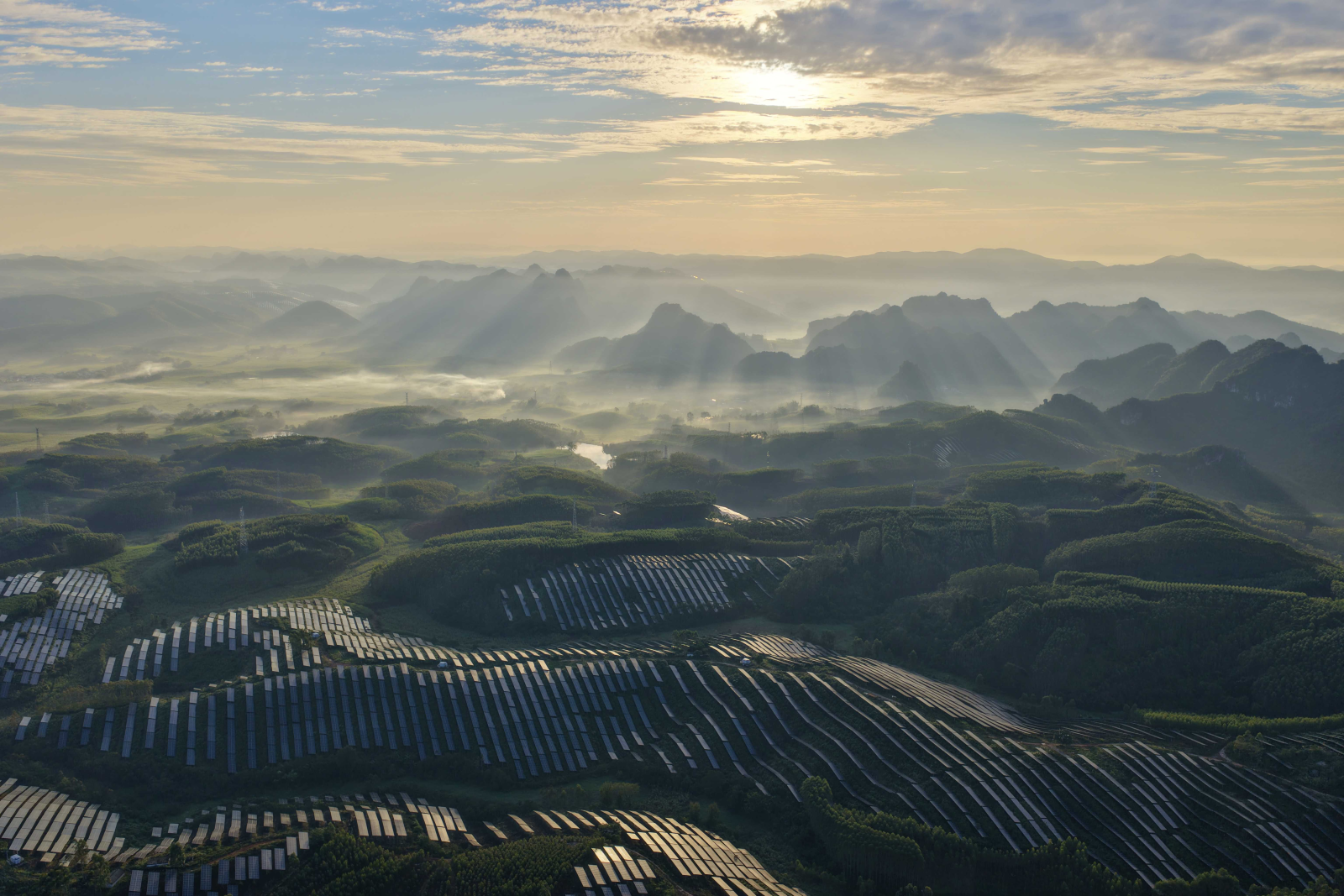
•Project Background:The project is located in Guangxi Province, set within a landscape surrounded by green hills. Antaisolar provided the complete fixed mounting system for the construction of a 200MW agri-PV power plant. As a demonstration project integrating regional energy transition and modern agriculture, it actively responds to China’s “dual carbon” goals and explores an innovative development model in southern humid and hilly regions—realizing “power generation above, cultivation below” through coordinated green development.
•Project Requirements:The project is situated in a typical southern mountainous area, characterized by hot, humid, and rainy conditions with complex terrain. The client required a fixed mounting solution capable of long-term stable operation in such environments while balancing PV generation efficiency and agricultural space utilization. Specifically: (1) The mounting system must offer excellent corrosion resistance and structural reliability to withstand high temperature and humidity. (2) The design must reserve sufficient space beneath the modules to enable efficient agricultural activities and land co-utilization. (3) The foundation solution must adapt to complex geological conditions, ensuring overall structural stability and safety.
 2. Project Challenges
2.1 Material Durability in Hot and Humid Environments
•Guangxi’s high temperature, heavy rainfall, and high humidity accelerate the corrosion of metal structures. The mounting system must provide long-term anti-corrosion performance to ensure a design lifespan exceeding 25 years.
2.2 Foundation Stability under Complex Geological Conditions
•The site may involve karst landforms or soft soil foundations, presenting challenges in bearing capacity, settlement resistance, and overall stability. The foundation design must ensure reliable structural support under these conditions.
2.3 Spatial Coordination and Benefit Optimization in Agri-PV Systems
•The system must balance optimal PV module tilt angle and spacing with sufficient light availability and operational space for crops and agricultural machinery. This requires precise optimization of mounting height and array layout to achieve both energy and agricultural benefits.
3. Solution
Antaisolar delivered a customized solution centered on a high-strength steel fixed mounting system, specifically designed for southern humid environments and agri-PV applications.
3.1 Corrosion Resistance for Humid Environments
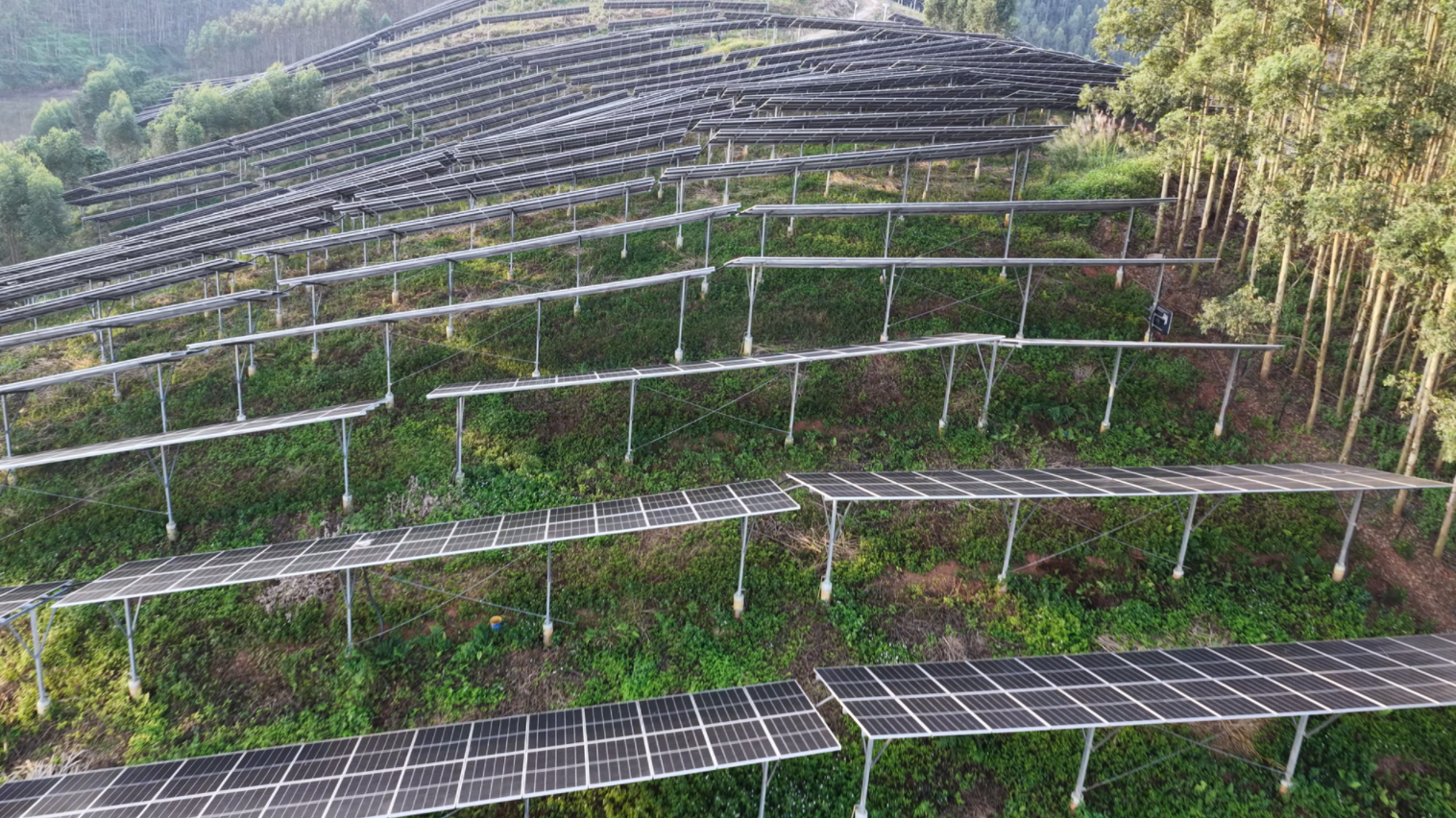
• The main structure is made of high-strength structural steel, providing excellent mechanical performance. Advanced anti-corrosion treatment, including hot-dip galvanization combined with enhanced composite coatings, effectively resists corrosion under high temperature and humidity, ensuring long-term durability of the system.
3.2 Reliable Foundation Design for Complex Geology
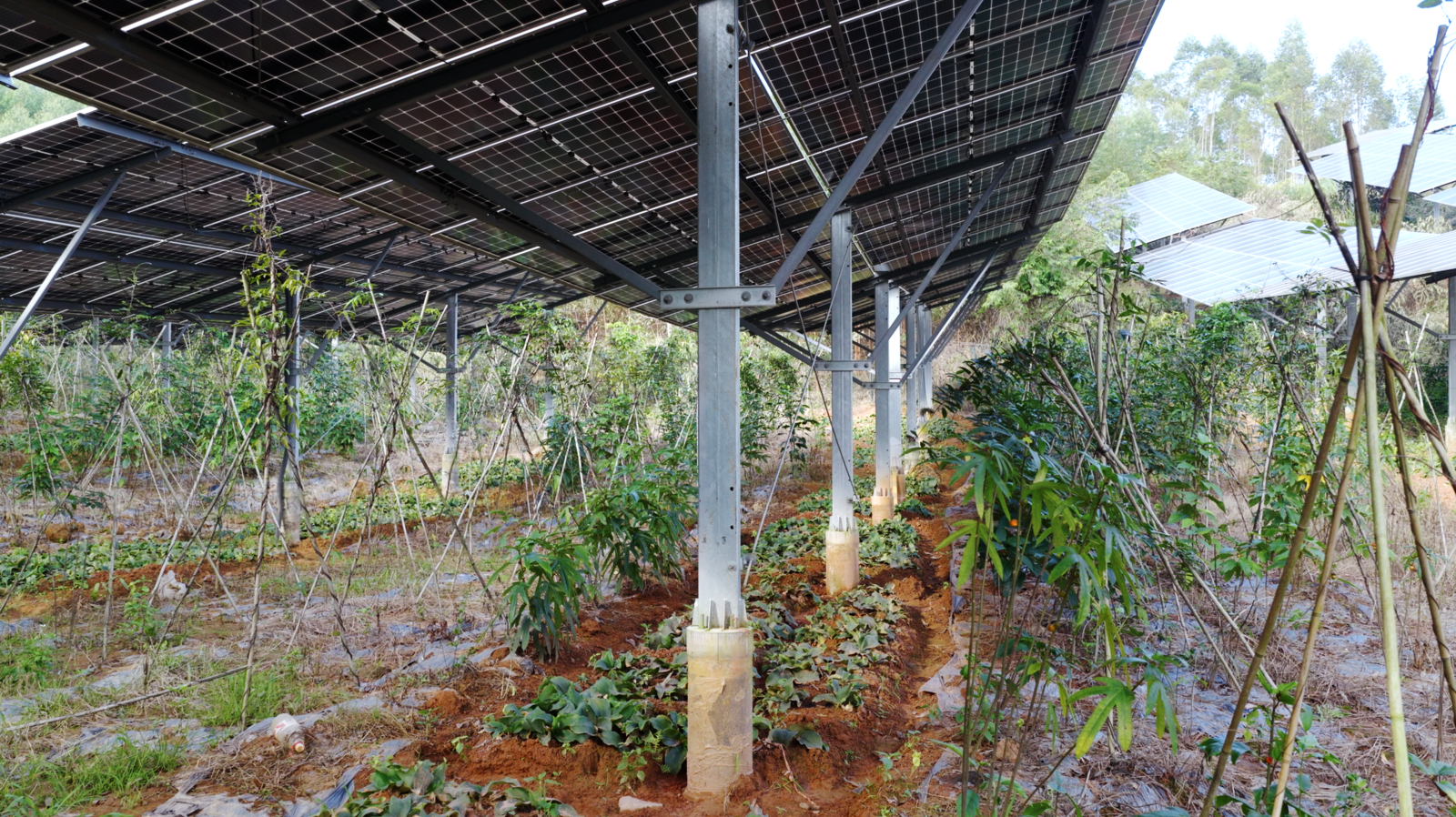
• Based on geotechnical survey data, a cast-in-place concrete pile foundation was adopted. The piles are formed through on-site casting, creating a strong bond with the ground, offering high bearing capacity and excellent settlement resistance, and ensuring stable support for the upper structure in complex mountainous terrain.
3.3 Optimized Height and Layout for Agri-PV Synergy
• The mounting system adopts a ground clearance of 2.5 meters, carefully optimized through engineering analysis. This height ensures optimal solar exposure and ventilation for PV modules while providing sufficient light conditions and operational space for crops and agricultural machinery beneath the array. The design effectively achieves the coordinated objective of “green power generation above and ecological cultivation below.”
4. Project Results
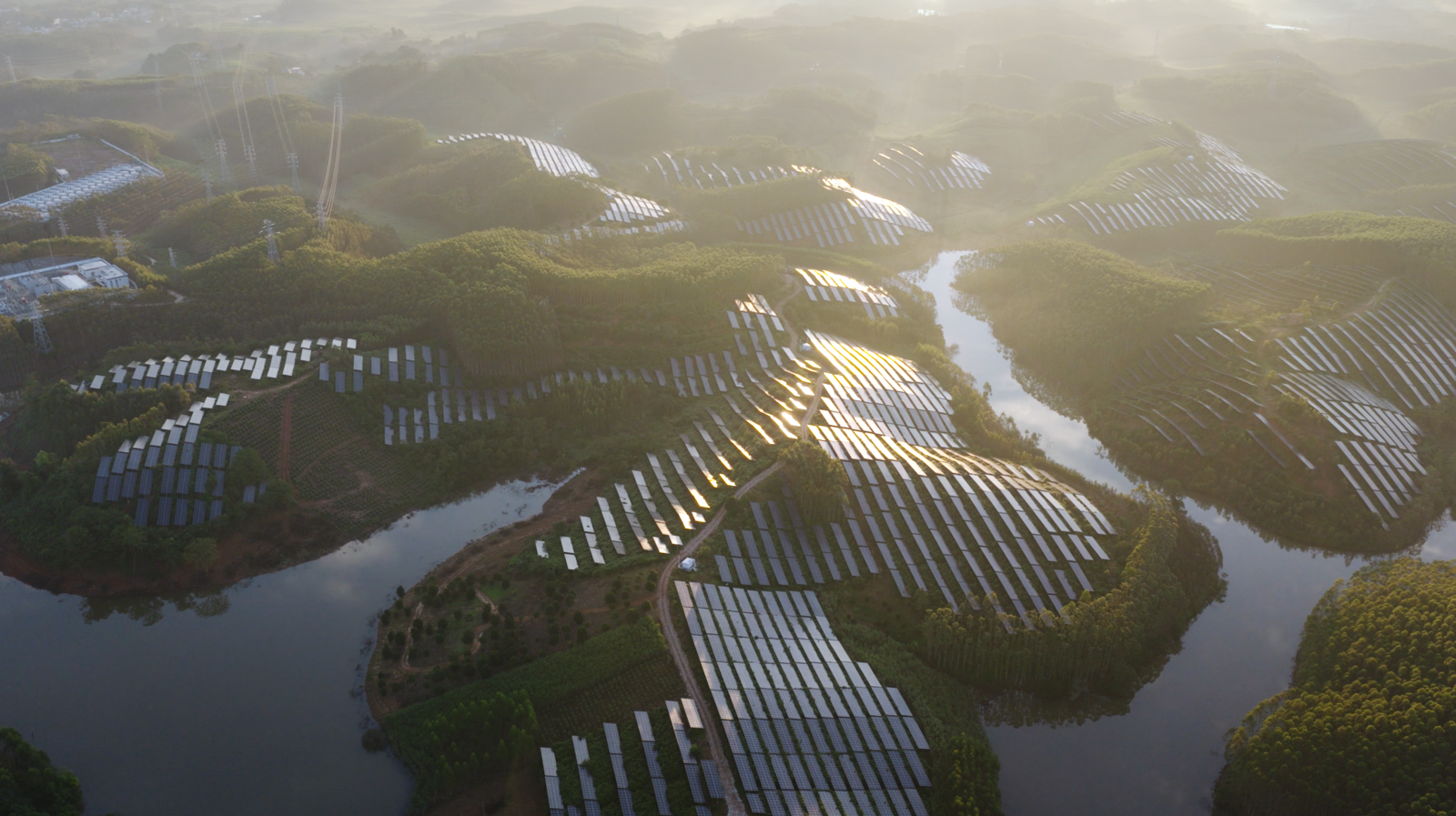
•Successful Commissioning and Stable Operation: The 200MW agri-PV power plant has been successfully grid-connected in Guangxi. The fixed mounting system provided by Antaisolar demonstrates outstanding durability and reliability, ensuring long-term safe operation under hot and humid environmental conditions.
•Significant Ecological and Socioeconomic Benefits: The plant generates substantial clean electricity annually, contributing to regional carbon emission reduction. Meanwhile, the land beneath the arrays is utilized for specialty agricultural cultivation, creating a dual-revenue model of “PV power generation income + agricultural product sales income.” This approach significantly improves land-use efficiency and increases farmers’ income. The project successfully demonstrates the feasibility of large-scale agri-PV deployment in humid mountainous regions. Its combination of durable materials for safety and optimized structural height for true synergy provides a replicable and scalable model for promoting integrated “PV + agriculture” development across southern hilly areas.
For more information, please visit: https://www.antaisolar.com/
Contact us: [email protected]
•Project Background:The project is located in Guangxi Province, set within a landscape surrounded by green hills. Antaisolar provided the complete fixed mounting system for the construction of a 200MW agri-PV power plant. As a demonstration project integrating regional energy transition and modern agriculture, it actively responds to China’s “dual carbon” goals and explores an innovative development model in southern humid and hilly regions—realizing “power generation above, cultivation below” through coordinated green development.
•Project Requirements:The project is situated in a typical southern mountainous area, characterized by hot, humid, and rainy conditions with complex terrain. The client required a fixed mounting solution capable of long-term stable operation in such environments while balancing PV generation efficiency and agricultural space utilization. Specifically: (1) The mounting system must offer excellent corrosion resistance and structural reliability to withstand high temperature and humidity. (2) The design must reserve sufficient space beneath the modules to enable efficient agricultural activities and land co-utilization. (3) The foundation solution must adapt to complex geological conditions, ensuring overall structural stability and safety.
2. Project Challenges2.1 Material Durability in Hot and Humid Environments
•Guangxi’s high temperature, heavy rainfall, and high humidity accelerate the corrosion of metal structures. The mounting system must provide long-term anti-corrosion performance to ensure a design lifespan exceeding 25 years.
2.2 Foundation Stability under Complex Geological Conditions
•The site may involve karst landforms or soft soil foundations, presenting challenges in bearing capacity, settlement resistance, and overall stability. The foundation design must ensure reliable structural support under these conditions.
2.3 Spatial Coordination and Benefit Optimization in Agri-PV Systems
•The system must balance optimal PV module tilt angle and spacing with sufficient light availability and operational space for crops and agricultural machinery. This requires precise optimization of mounting height and array layout to achieve both energy and agricultural benefits.
3. Solution
Antaisolar delivered a customized solution centered on a high-strength steel fixed mounting system, specifically designed for southern humid environments and agri-PV applications.
3.1 Corrosion Resistance for Humid Environments
• The main structure is made of high-strength structural steel, providing excellent mechanical performance. Advanced anti-corrosion treatment, including hot-dip galvanization combined with enhanced composite coatings, effectively resists corrosion under high temperature and humidity, ensuring long-term durability of the system.
3.2 Reliable Foundation Design for Complex Geology
• Based on geotechnical survey data, a cast-in-place concrete pile foundation was adopted. The piles are formed through on-site casting, creating a strong bond with the ground, offering high bearing capacity and excellent settlement resistance, and ensuring stable support for the upper structure in complex mountainous terrain.
3.3 Optimized Height and Layout for Agri-PV Synergy
• The mounting system adopts a ground clearance of 2.5 meters, carefully optimized through engineering analysis. This height ensures optimal solar exposure and ventilation for PV modules while providing sufficient light conditions and operational space for crops and agricultural machinery beneath the array. The design effectively achieves the coordinated objective of “green power generation above and ecological cultivation below.”
4. Project Results
•Successful Commissioning and Stable Operation: The 200MW agri-PV power plant has been successfully grid-connected in Guangxi. The fixed mounting system provided by Antaisolar demonstrates outstanding durability and reliability, ensuring long-term safe operation under hot and humid environmental conditions.
•Significant Ecological and Socioeconomic Benefits: The plant generates substantial clean electricity annually, contributing to regional carbon emission reduction. Meanwhile, the land beneath the arrays is utilized for specialty agricultural cultivation, creating a dual-revenue model of “PV power generation income + agricultural product sales income.” This approach significantly improves land-use efficiency and increases farmers’ income. The project successfully demonstrates the feasibility of large-scale agri-PV deployment in humid mountainous regions. Its combination of durable materials for safety and optimized structural height for true synergy provides a replicable and scalable model for promoting integrated “PV + agriculture” development across southern hilly areas.
For more information, please visit: https://www.antaisolar.com/
Contact us: [email protected]
Previous
27.59MW Sunner Group Food Processing Plant Roof Mounting System | Jiangxi, China
Next
13.30MW Asia No. 1 Logistics Park Roof Mounting System | Zhejiang, China
RELATED NEWS